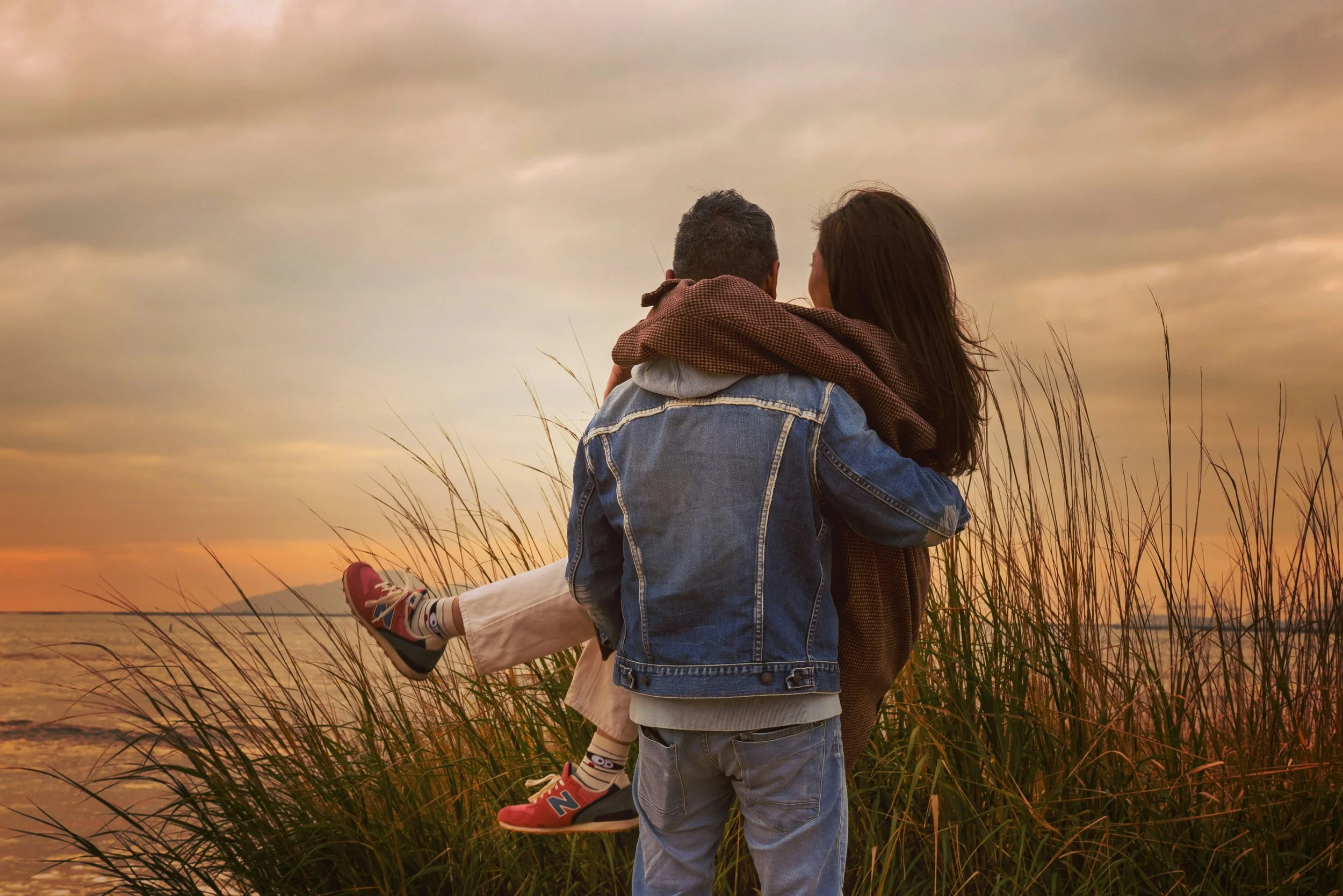

Love. Few other words evoke such a range of emotions. We long for it, we lose it, we question it. Some call it a feeling, others a choice. And yes, in a way, it's also biochemistry. So what is love: a feeling, a choice or a biological programme? In this blog, I share how I view love through the lens of an analytical psychologist, while also acknowledging my deepest personal conditioning: an innate longing for connection.
Your brain responds to closeness, affection and physical touch with a delicate cocktail of hormones and neurotransmitters such as dopamine, oxytocin and serotonin. They create that warm, connected feeling you may remember from the first few weeks of falling in love. But love is more than chemistry. It's a psychological and relational process, deeply connected to your inner experiences.

How you love is strongly influenced by how you learned to form attachments. Did you experience closeness as something safe when you were a child? Or was it associated with uncertainty? These early experiences shape what feels «right» to you later in life, and what makes you feel insecure. Love, then, isn't just a feeling that happens to you. It's also a reflection of your personal history.
Why are you attracted to certain people and not others?
Perhaps you know the feeling: you meet someone and immediately sense a special attraction. The spark is there, and you can't quite explain why. It feels familiar, almost as though you've known each other forever.
Attachment psychology suggests that we're often drawn to people who unconsciously evoke something familiar within us. This can mean security, but it can also mean repetition. For example, if you grew up with an emotionally distant parent, you may find yourself repeatedly falling in love with people who are similarly unavailable. It feels «right» because it's familiar, not necessarily because it fulfils your needs.
This is where there's great potential for personal growth: you can learn to distinguish between what feels familiar and what is genuinely good for you. Sometimes that means opening yourself up to a different kind of love, one that feels different: calmer, more stable and less exciting, but ultimately more genuine.
When is it really love, and when is it more about neediness or fear?
Love can make you feel stronger, or it can make you feel small. This often depends on whether it comes from a place of abundance or lack. If you need someone else to make you feel whole, a dynamic of dependency and fear can easily develop. The focus then shifts away from growing together and towards simply avoiding being alone.
Neediness often shows itself in subtle ways. Perhaps you wait for the other person to validate you. Perhaps you panic when they withdraw. Perhaps you try to do everything right to avoid being abandoned. Genuine love, by contrast, leaves room to breathe. It grows when you can allow closeness without losing yourself.
A little reflection:
Do you feel freer or more constrained in your relationship?
Can you be yourself, even when the other person doesn't admire or understand you?
If you reflect honestly on these questions, you'll begin to recognise whether you're holding on out of fear or choosing to stay out of love.
Why love can sometimes hurt, and what that tells you about yourself
Love isn't a constant state of ease. Sooner or later, it will confront you with your vulnerable spots. Perhaps an offhand remark from your partner hurts you more than you can understand. Perhaps you suddenly feel overlooked or rejected and react more strongly than the situation seems to warrant. (For those of you who've attended my training, think back to your triggers.)

This happens because relationships can bring old emotions to the surface. Someone close to you may unconsciously press the same buttons as people from your past from whom you once sought love or attention. The pain isn't new. It's old. The relationship simply brings it into view.
When you begin to see these moments not as threats, but as opportunities for something new and healing to emerge, things can change. Instead of immediately becoming defensive or withdrawing, you can ask yourself:
«What exactly has this situation stirred up in me?»
«Is this an old hurt, or is it genuinely about what's happening now?»
This kind of awareness allows you to grow internally and helps love mature, too.
Wie wächst Liebe über die Verliebtheit hinaus?
Verliebtheit ist ein Feuerwerk. Sie zieht dich magnetisch an, lässt dich träumen, vergessen, zweifeln. Doch sie ist nur der Anfang. Wenn der Rausch sich legt, zeigt sich, ob du bereit bist, wirklich zu lieben. Liebe beginnt dort, wo die Projektion endet. Wenn du aufhörst, im anderen das zu sehen, was du dir wünschst, und beginnst, ihn wirklich wahrzunehmen – mit Licht und Schatten.
Das ist oft der Moment, in dem Enttäuschung einsetzt. Der andere ist nicht so perfekt, wie du gehofft hattest. Aber gerade hier kann echte Nähe entstehen.
Reife Liebe wächst, wenn du lernst, Unterschiede auszuhalten. Wenn du dich nicht verschliesst, weil etwas schwierig wird, sondern bleibst und kommunizierst. Wenn du Verantwortung für deine Gefühle übernimmst, statt sie dem anderen in die Schuhe zu schieben.

In this way, love becomes less a matter of chance and more a conscious choice.
What does it mean to love yourself, and why is it the beginning of everything?
Self-love isn't a luxury. It's the foundation of every healthy relationship. It doesn't mean thinking you're wonderful all the time, but treating yourself with kindness, even when you're feeling weak, insecure or inadequate. It's essential to remain attentive and honest with yourself. When you truly listen to yourself, you become aware of what's going on inside you and can take steps to influence it.
When you learn to support yourself emotionally, you become less dependent on others to carry you. You grow more independent on the inside, and that changes everything: your boundaries, your expectations and the way you allow others to get close.
A little exercise for everyday life: Pay attention to your inner dialogue over the next few days.
What do you say to yourself when you make a mistake? How do you speak to yourself when you feel rejected? Try to make that inner voice a little kinder, as if you were speaking to someone you genuinely care about. The more secure you feel within yourself, the more freely you can love.
If you want to go deeper, pay attention to your patterns. They keep repeating until you consciously interrupt them. I recommend reading my previous blog post on this topic. As explained above, your patterns have a significant influence on how you love.
Conclusion: Love as a reflection of your inner world
Love shows you where you've healed and where you still have room to grow.
It's not a destination you reach, but a journey that leads you back to yourself. Every encounter, every conflict, every moment of closeness and every goodbye is part of that journey.
Perhaps this is the deepest truth about love: it always begins within you.
And that's when you become capable of experiencing the most fulfilling kind of love. I particularly like this passage from Anne Morrow Lindbergh's book Gift from the Sea (a book my grandmother gave me):
«When you love someone, you do not love them all the time, in exactly the same way, from moment to moment. It is impossible. It is even a lie to pretend to. And yet this is exactly what most people demand. We have so little faith in the ebb and flow of life, of love, of relationships. We leap at the rising tide and resist in terror the ebb. We are afraid it will never return. We insist on permanence, on duration, on continuity; when the only continuity possible, in life as in love, is in growth, in fluidity, in freedom, in the sense that dancers are free, barely touching as they pass, but partners in the same pattern.»